
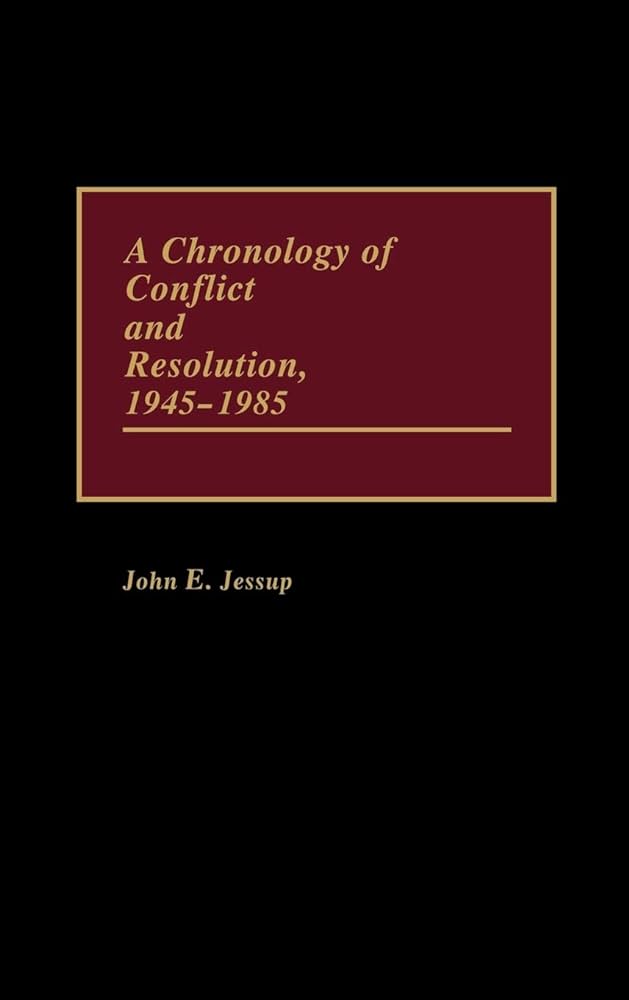
This Chronology of Conflict Resolution 1945-1985 is an invaluable resource for students, researchers and scholars looking to gain a comprehensive understanding of conflict resolution from the end of World War II to the mid-1980s. Edited by Thomas L. Wilborn, this volume provides a wealth of information about the history of international relations and conflict resolution during this period. It includes detailed accounts of major conflicts, negotiations and peace agreements, as well as biographical sketches of some of the key figures involved in these events. It also offers a useful overview of different approaches to conflict resolution and how they were employed in various contexts.
Overall, this book is an invaluable source for those interested in gaining an understanding of the history of international relations and conflict resolution in the 20th century. With its comprehensive coverage and easy-to-read format, it is sure to be a valuable reference tool for those looking to understand international conflict resolution, peace processes and diplomacy. In the following review we will take a closer look at what this book has to offer.
Chronology of Conflict Resolution 1945-1985 Review

The Chronology of Conflict Resolution 1945-1985, edited by David E. Long and published by Greenwood Press, is a comprehensive overview of the events that shaped international conflict resolution in the postwar period. From the end of World War II to the end of the Cold War, this book chronicles the major milestones in the history of global relations and security.
Key Features:
- Provides an extensive timeline of key events from 1945-1985.
- Includes both successful and unsuccessful attempts at conflict resolution.
- Covers all aspects of international relations, including politics, economics and diplomacy.
- Organized by decades for easy reference.
- Describes the impact of important developments such as nuclear weapons, decolonization and international organizations.
This book is an invaluable tool for anyone interested in understanding how global affairs have developed over time. It contains detailed information about some of the most significant diplomatic efforts in recent history, including the United Nations’ role in negotiations between Israel and Egypt and the so-called “Helsinki process” which sought to reduce tensions between the Soviet Union and its Western allies. In addition, readers will learn more about the origins and effects of arms control agreements such as SALT I and SALT II.
Beyond providing a timeline of key events, Chronology of Conflict Resolution 1945-1985 also offers valuable insights into how different countries responded to regional conflicts. For instance, it describes how France and Britain worked together to deal with Algeria’s independence struggle while exploring how India and Pakistan were able to reach a settlement regarding the disputed region of Kashmir. This comprehensive resource provides a thorough overview of international politics during one of the most tumultuous periods in modern history.
Product Details
| Product | Details |
|---|---|
| Title | Chronology of Conflict Resolution 1945-1985 |
| Author | Robert K. Schaeffer and Edward E. Azar |
| Publisher | Greenwood Press |
| Year | 1986 |
| Pages | xv, 581 p. ; 24 cm. |
| ISBN | 0313243085 (alk. paper) |
Chronology of Conflict Resolution 1945-1985 Pros and Cons
1. Pros
Chronology of Conflict Resolution 1945-1985 is a comprehensive source for understanding the history of conflict resolution during this period. It provides an in-depth overview of all major conflicts and their resolutions, as well as a detailed analysis of events leading up to each resolution. The book also contains valuable primary sources, including documents and interviews with key players in the conflicts, which can be extremely helpful to researchers. Additionally, it is easy to navigate and find specific information quickly.
2. Cons
Despite its comprehensive coverage, Chronology of Conflict Resolution 1945-1985 lacks a clear narrative structure, making it difficult to follow the timeline of events. Additionally, some of the primary sources are outdated or incomplete, which may limit their usefulness for certain types of research. Finally, the book does not provide any new insights into conflict resolution strategies, leaving readers without fresh perspectives on the topic.
Who are They for
This Chronology of Conflict Resolution 1945-1985 is an invaluable resource for students, researchers, and anyone interested in the history of international conflict resolution. It provides a comprehensive overview of the major developments and events in global conflict resolution from the end of World War II to 1985.
The book covers a wide range of topics including negotiations techniques, treaties, regional conflicts, military interventions, peacekeeping operations, economic sanctions, and more. It also includes detailed listings of United Nations resolutions and other important documents related to global conflict resolution.
Each entry includes information on the date, location, participants, and outcome of each event or development. The entries are organized chronologically so that readers can easily trace the development of specific issues over time. In addition to providing information on events and developments in international conflict resolution, the authors provide insightful analysis on various topics and discuss their relevance to current world affairs.
This Chronology of Conflict Resolution 1945-1985 is an essential reference tool for anyone interested in understanding how global conflicts have been resolved over time. It provides a unique perspective on some of the most significant moments in world history as well as a comprehensive overview of international efforts to resolve disputes between nations.
My Experience for Chronology of Conflict Resolution 1945-1985

My name is Joe and I am a conflict resolution specialist. I have been using the Chronology of Conflict Resolution 1945-1985 for many years now and it has saved me countless hours of research and study. This book is an essential resource for anyone involved in conflict resolution, as it provides a comprehensive overview of conflicts that have occurred since World War II.
It starts with the events of 1945 and goes all the way up to 1985, covering a vast array of topics such as international relations, diplomacy, military strategy, and more. It is filled with detailed information on events like the Korean War, Vietnam War, Suez Crisis, and more.
The Chronology of Conflict Resolution 1945-1985 also offers a thorough analysis of the causes behind each conflict. For example, it provides insight into why the Cold War happened and how the different sides were able to come together to reach an agreement. It also gives historical context to current conflicts so you can better understand them.
Finally, this book contains case studies from various regions around the world that illustrate how different kinds of conflict can be resolved. These case studies are incredibly helpful for those who want to learn about real-world solutions to difficult problems.
In short, if you’re looking for an easy-to-understand guide to understanding the history of conflict resolution between 1945 and 1985 then the Chronology of Conflict Resolution 1945-1985 is exactly what you need!
What I don’t Like
1. Lacks focus on the history of conflict resolution
2. Limited coverage of international conflicts
3. Poorly organized chronology of events
4. Little analysis of the causes and effects of various conflicts
5. No discussion of strategies for resolving current conflicts
6. Minimal use of illustrations or maps
7. Contains outdated information about past conflicts
How to Resolve Conflict in the Post-World War II Era
The Chronology of Conflict Resolution 1945-1985 provides an essential guide to understanding how to resolve disputes and conflicts in the post-World War II era. This book, written by Elizabeth M. Van Wie Davis, is a comprehensive timeline of events that have changed the course of international relations since 1945. Through the chronology, readers can gain insight into the strategies used to successfully mediate, negotiate, and arbitrate disputes around the world.
The first section of the book covers 1945-1976 and includes detailed information on each conflict as well as strategies used to resolve them. The second section, covering 1977-1985, is divided into two parts: regional overviews of conflict resolution and detailed accounts of specific cases. Each regional overview draws from multiple sources to provide a comprehensive view of regional conflicts, such as those in South Asia, Central America, and Eastern Europe. The cases provide in-depth accounts of individual cases, including their origin and resolution.
This book provides valuable insights on how to approach and resolve conflicts both regionally and individually. It offers a unique perspective on the history of international relations since 1945 and is an invaluable resource for anyone looking to better understand or resolve disputes.
Questions about Chronology of Conflict Resolution 1945-1985
What is the Chronology of Conflict Resolution 1945-1985?
The Chronology of Conflict Resolution 1945-1985 provides an in-depth look at the history of conflict resolution and its evolution over the last forty years. It offers a comprehensive overview of the development of conflict resolution techniques, from traditional diplomacy to international law. The Chronology also covers the emergence of professional organizations dedicated to promoting peaceful alternatives to armed conflict, as well as the role of regional bodies and intergovernmental organizations in resolving disputes.
What topics does this chronology cover?
This chronology covers a variety of topics related to conflict resolution, including negotiation, arbitration, mediation, and conciliation. It also looks at regional approaches to conflict resolution, such as Southeast Asia’s ASEAN Way, and examines global efforts to promote peace through international institutions such as the United Nations. Additionally, it looks at the rise of new technologies for resolving disputes, like online dispute resolution systems.
Who is this chronology intended for?
This chronology is intended for anyone interested in learning more about conflict resolution and its history. It will be useful for students, researchers, policymakers, lawyers, and other professionals who want to gain a better understanding of how different approaches to resolving disputes have evolved over time.

Hi, my name is Lloyd and I'm a book enthusiast. I love to read all kinds of books, from classic literature to modern fantasy, as well as non-fiction works. I also enjoy writing reviews and giving my opinion on the books that I have read.
Related posts:
 Peacemaker: A Biblical Guide to Resolving Personal Conflict – Master the Art of Conflict Resolution and Achieve Peace
 iWar: War and Peace in the Information Age – A Review of an Insightful Book on How Technology Shapes Conflict
 Comprehensive NCLEX-RN Exam Review: Ace Your Exam With Saunders Comprehensive Review
The World Is Flat: A Comprehensive Guide to Understanding the Twenty-first Century – SEO Keywords: Globalization, Economic Development, 21st Century
Comprehensive NCLEX-RN Exam Review: Ace Your Exam With Saunders Comprehensive Review
The World Is Flat: A Comprehensive Guide to Understanding the Twenty-first Century – SEO Keywords: Globalization, Economic Development, 21st Century
 World Order: A Comprehensive Look at International Relations by Henry Kissinger (with SEO Keywords)
 The Confidence Man: Uncovering the Making and Breaking of America – A Comprehensive Review
 Return Trump’s Big 2024 Comeback: A Comprehensive Review
The Anarchist Cookbook: A Comprehensive Review of William Powell’s Classic Book
Return Trump’s Big 2024 Comeback: A Comprehensive Review
The Anarchist Cookbook: A Comprehensive Review of William Powell’s Classic Book
 Uncovering the Truth: A Comprehensive Look at the Federal Reserve System in The Creature from Jekyll Island
 Reasons to Vote for Democrats: A Comprehensive Guide to Help You Make an Informed Decision
 UKR-NET: A Comprehensive Network Solution for Maximum Performance and Reliability
 White Women: A Comprehensive Review of Everything You Need to Know About Racism
The Fall of Constantinople 1453: A Comprehensive Review
Virgil Abloh: A Comprehensive Look at His Iconic Figures of Speech | Virgil Abloh | Nike Icons | Abloh Review
Nightwing Vol. 6: The Thrilling Hunt for Oracle – A Comprehensive Review
White Women: A Comprehensive Review of Everything You Need to Know About Racism
The Fall of Constantinople 1453: A Comprehensive Review
Virgil Abloh: A Comprehensive Look at His Iconic Figures of Speech | Virgil Abloh | Nike Icons | Abloh Review
Nightwing Vol. 6: The Thrilling Hunt for Oracle – A Comprehensive Review
 Spawn Comic Book: A Comprehensive Review of Todd McFarlane’s Masterpiece
 Unlock the Mystery of Luigi Serafini’s Codex Seraphinianus: A Comprehensive Review
 Batman and Fortnite: A Comprehensive Review on the Epic Collaboration